The plates, in full.
Every illustration on this site, with attribution to its holding institution and a short note on why we chose it. All plates are unambiguously public-domain.
- Vitruvian Man
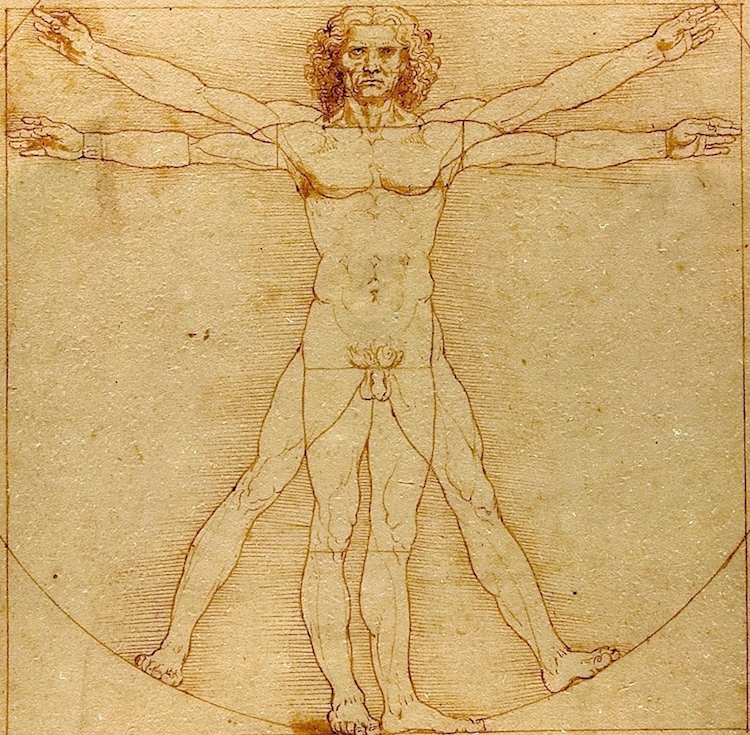 Pl. I.c. 1490
Vitruvian Man
Leonardo da Vinci
The hero plate. Geometry as a claim about the body — the diagram that says human proportions are knowable, measurable, repeatable. Every page humanovo will ever ship descends from this gesture.
- Technique
- Pen and ink on paper
- Date
- c. 1490
- License
- Public domain (pre-1928)
- Appears
- Hero
Leonardo da Vinci, Study of proportions of the human body (Vitruvian Man), pen and ink on paper, c. 1490. Gallerie dell'Accademia, Venice.
- De humani corporis fabrica — frontispiece
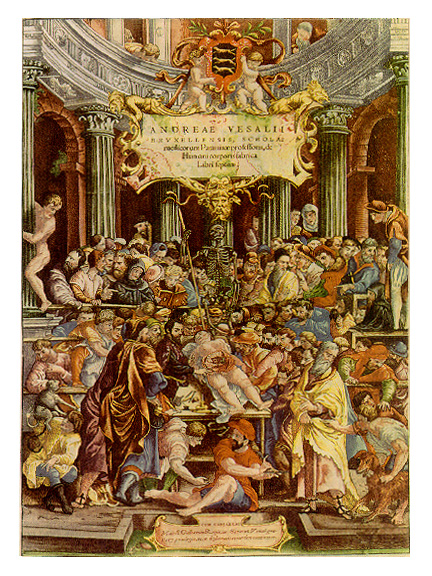 Pl. II.1543
De humani corporis fabrica — frontispiece
Andreas Vesalius (drawing by Jan van Calcar)
The opening plate of the modern scientific method. An anatomical theatre — scholars, specimens, manuscripts, instruments composed into one frame. Already a multi-stage pipeline four hundred and eighty years before software was a word.
- Technique
- Woodcut
- Date
- 1543
- License
- Public domain
- Appears
- Pipeline · Stage I (Ingest)
Andreas Vesalius, De humani corporis fabrica libri septem, frontispiece woodcut, 1543 (Basel: Joannis Oporini). Drawing by Jan van Calcar.
- Heart and its blood vessels
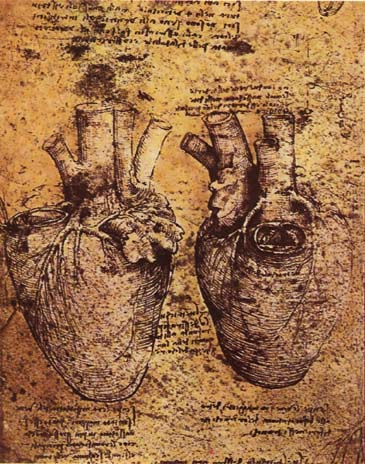 Pl. III.c. 1508–1513
Heart and its blood vessels
Leonardo da Vinci
Cross-correlation made visual: the same chamber drawn from four angles on a single folio so the inconsistencies could reveal themselves on contact with paper. The exact register humanovo's grounding pipeline runs in, five centuries later.
- Technique
- Pen and brown ink on paper
- Date
- c. 1508–1513
- License
- Public domain (pre-1928)
- Appears
- Pipeline · Stage II (Analyze)
Leonardo da Vinci, Anatomical study of the heart, lungs, and blood vessels, pen and brown ink on paper, c. 1508–1513. Royal Collection Trust, Windsor Castle.
- Prima Musculorum Tabula
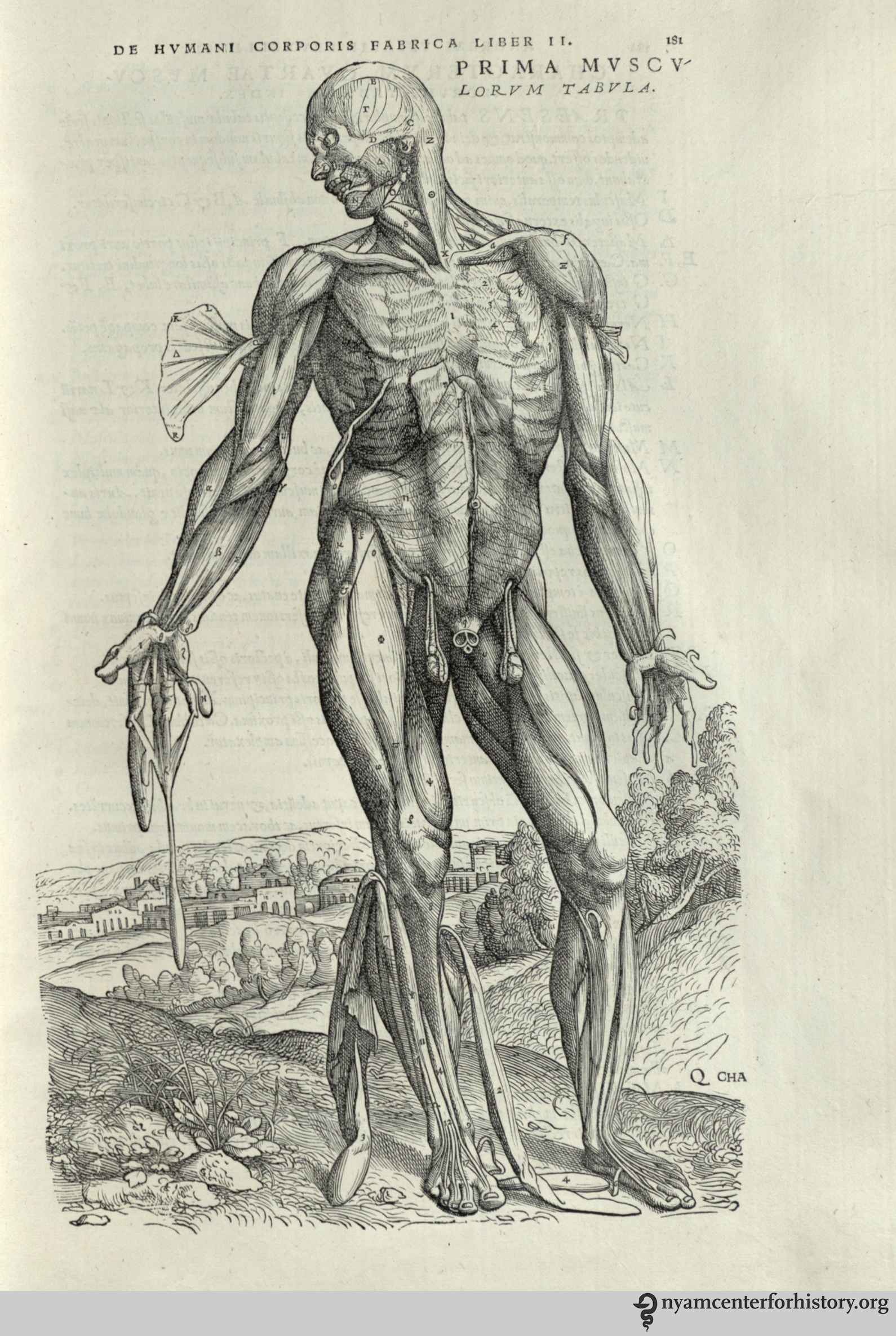 Pl. IV.1543
Prima Musculorum Tabula
Andreas Vesalius (drawing by Jan van Calcar)
Illustration becomes hypothesis. The standing figure posed in a Tuscan landscape, asking the viewer to look at the muscles in the world, not on a slab. Every Renaissance plate was a wordless claim about how a body moves.
- Technique
- Woodcut
- Date
- 1543
- License
- Public domain
- Appears
- Pipeline · Stage III (Generate)
Andreas Vesalius, De humani corporis fabrica libri septem, Prima Musculorum Tabula, 1543 (Basel: Joannis Oporini). Drawing by Jan van Calcar.
- Écorché with ancillary studies
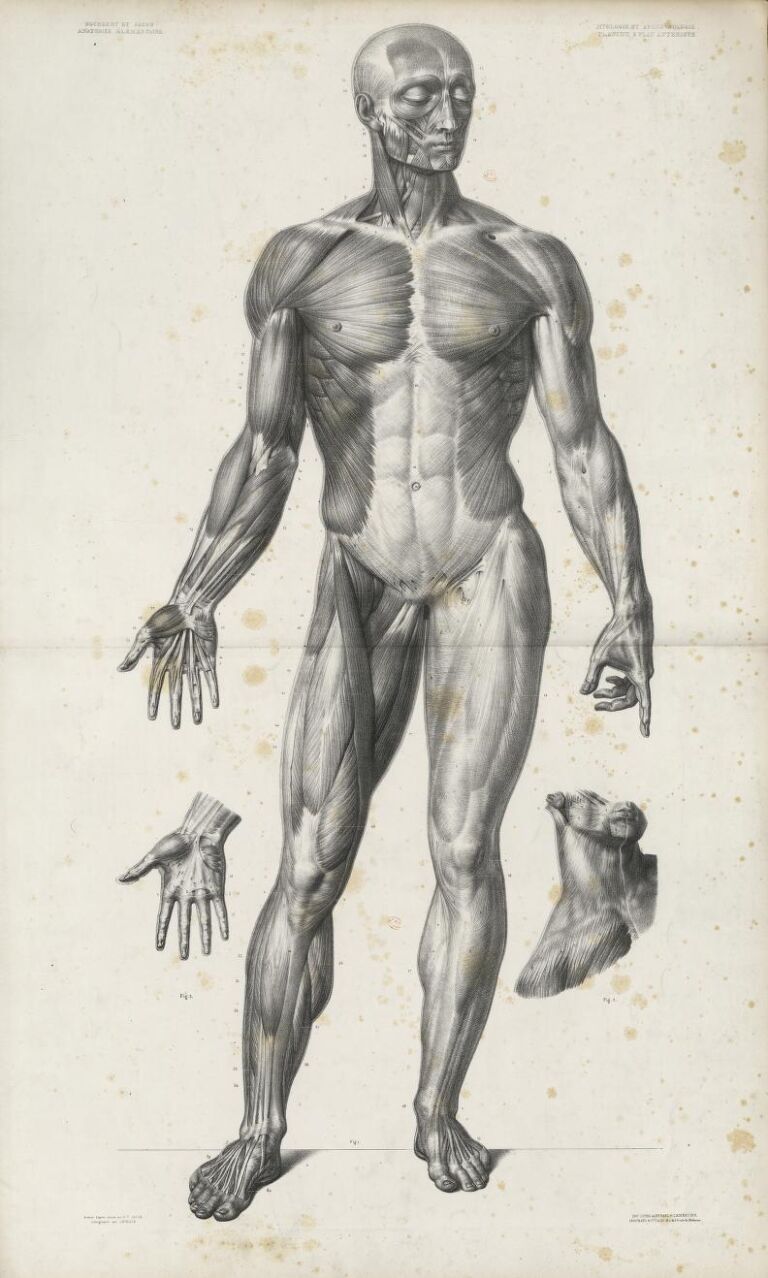 Pl. V.1831–1854
Écorché with ancillary studies
Nicolas-Henri Jacob (illustration); Bourgery (author)
The institutional library, in plate form. A central figure surrounded by adjacent studies of the same hand, the same foot — organised so the next investigator could pick up the thread. Bourgery's atlas is what a research workspace wanted to be before workspaces were software.
- Technique
- Lithograph, hand-coloured
- Date
- 1831–1854
- License
- Public domain
- Appears
- Pipeline · Stage IV (Manage)
Jean-Baptiste Marc Bourgery and Nicolas-Henri Jacob, Traité complet de l'anatomie de l'homme, lithographic plate, 1831–1854 (Paris). Bibliothèque nationale de France.
- Historia de la composicion del cuerpo humano
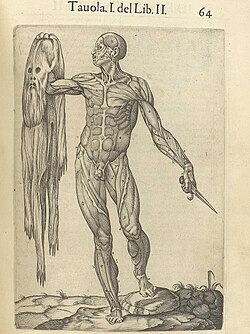 Pl. VI.1556
Historia de la composicion del cuerpo humano
Gaspar Becerra (drawings); Nicolas Beatrizet (engravings)
Geographic + chronological breadth for the canon. Valverde's Spanish-Italian publication shows Renaissance anatomy travelling beyond Padua — the Vesalian project as an idea rather than a single book.
- Technique
- Copperplate engraving
- Date
- 1556
- License
- Public domain
Juan Valverde de Amusco, Historia de la composicion del cuerpo humano, 1556 (Rome: Antonio de Salamanca and Antonio Lafrery). Drawings by Gaspar Becerra; engravings by Nicolas Beatrizet. Library of Congress.